97 Street Safeway
In 1929, a new cash-and-carry grocery chain from the western United States arrived in Edmonton, bringing with it this Spanish Revival storefront.
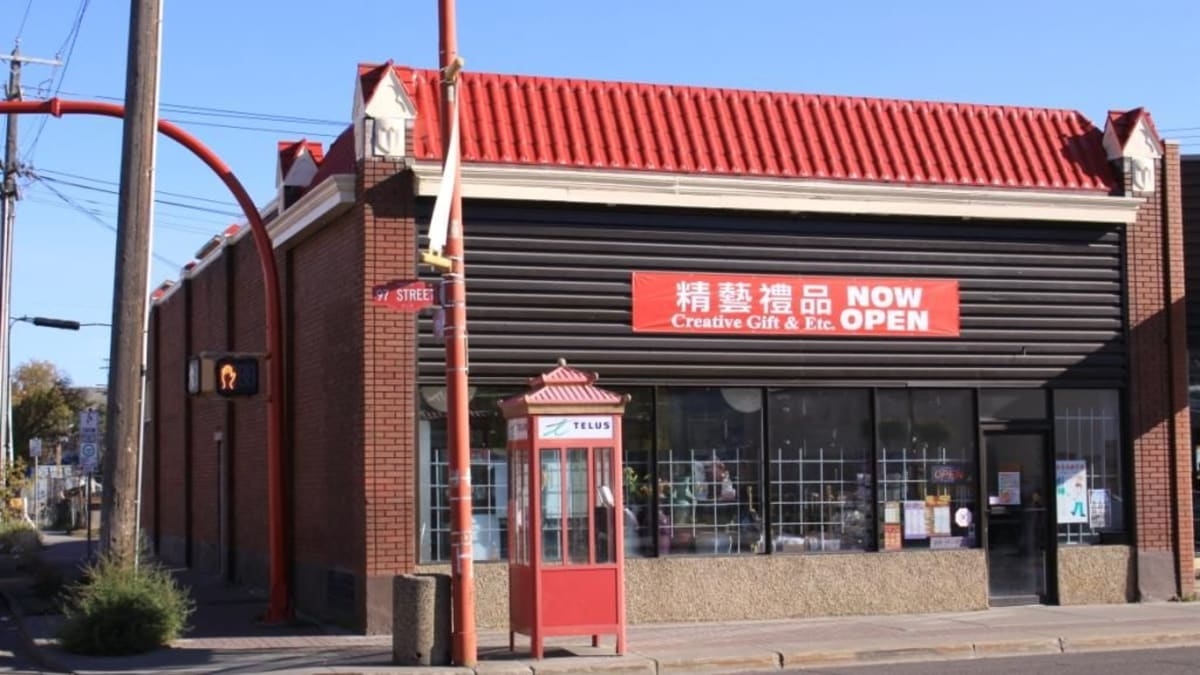
Details
- Historic designation
- Unknown
- Time period
- The War Years: 1914-1945
- People
- TBD
- Architectural styles
- Spanish Revival
- Character defining elements
- Brick Structure, Flat Roof, One Storey, Pilaster, Rectangular Footprint
Location
About
The Safeway store that was built on the southeast corner of 97th Street and 106th Avenue in 1929 used a Spanish Revival influenced style that was very common in California, where the company was based. The most recognizable feature of the Spanish Revival style is the red clay tile roof. Safeway accented this common feature with the corner tower-like pillars capped with intersecting gables of decorative white stone and clay tile. These elements would be used in all 10 of Safeway's early stores in Edmonton. Much like many of today's chain stores, in the 1930s the Safeway brand was synonymous with their stores' architecture.
In the 1920s M.B. Skagg established the Idaho-based Skagg's United Stores, one of the first cash-and-carry grocery chains in North America. Within a few years this chain merged with the Sam Selig Stores based out of Los Angeles. The chain became Skagg's Safeway in 1926, later shortened to Safeway. The first Canadian Safeway stores appeared in 1929. The Canadian branch soon acquired the Piggly Wiggly food stores, Empress Manufacturing, and A. MacDonald food wholesaler. Later, these procurements included the Edmonton based Jasper Dairy Co. (later named Lucerne) in 1966, and Woodward's Food Floors in 1987. The earliest stores were of the small self-service variety, while the 1950s brought in the era of larger supermarkets noted for their own meat departments and bakeries. Replacing the Sunlight Laundry building that had operated on that corner since 1915, this 97 Street Safeway stayed in business until 1962. It subsequently became a repair shop, janitor supply shop, and market.