North Edmonton Telephone Exchange
Soaring demand for telephone lines made this telephone exchange essential in 1912.
Details
- Built
- 1912
- Neighbourhood
- Spruce Avenue
- Historic designation
- Unknown
- Time period
- Urban Growth: 1905-1913
- People
- Allan Merrick Jeffers
- Architectural styles
- Edwardian
- Character defining elements
- Brick Structure, Cornice, Gabled Parapet, Keystone, Rectangular Footprint, Two Storeys
Location
About
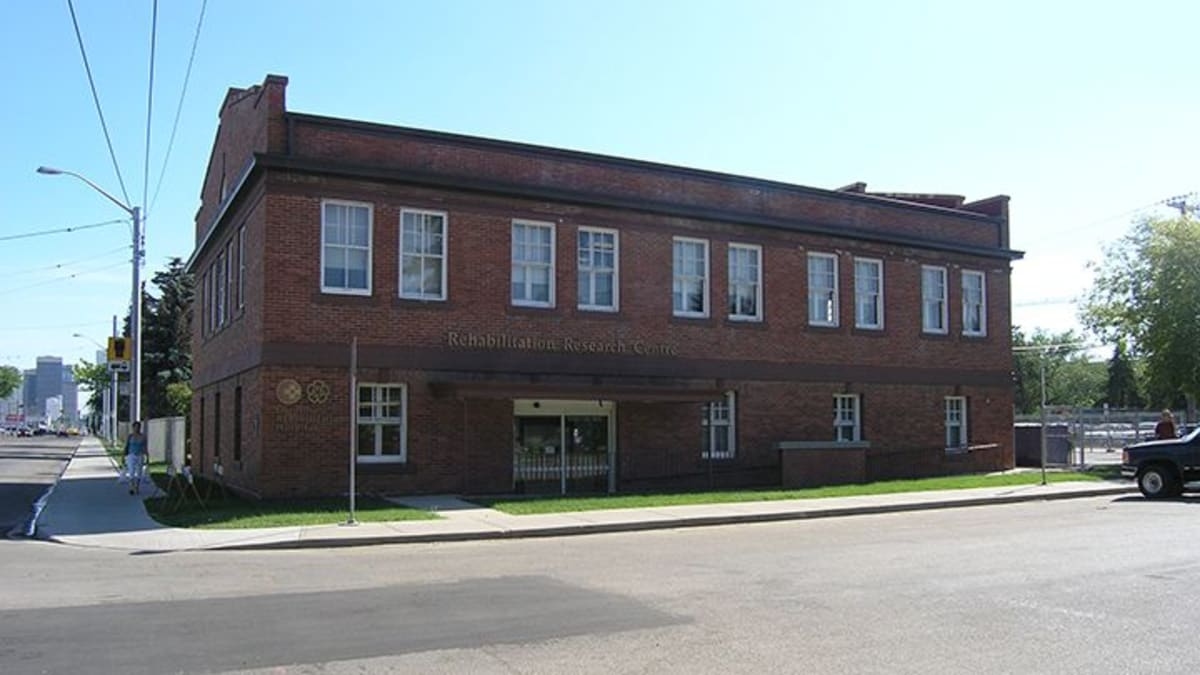
Edmonton pioneered the installation of the first automatic telephones in North America in 1908. Over 1,000 new subscribers signed on to the City of Edmonton telephone system in the following years and, with the addition of the purchased Strathcona telephone lines, the Pine Street (North Edmonton) Exchange and West Edmonton Exchange were built in 1912 to meet the needs of the growing city. Each exchange was built with the Strowager three-wire telephone system and contained enough equipment to serve 2000 subscribers. By 1919, Edmonton's exchanges were working to capacity with one telephone for every five citizens.
Identical in their design, the exchange buildings housed telephone equipment, facilities for switch and line construction crews, and the local pay station office. The features of the buildings include red brick construction; stone-capped, raised and segmented gabled parapets; symmetrical fenestration of six-over-one windows on both storeys; and muti-panel semi-circular attic windows with keystones and articulated brick headers. Horizontal stone banding on the main floor, wraparound cornices, belt courses, and stone sills add further detail.
Unable to keep up with expansion, the North Edmonton Exchange closed in 1958. Two years later the City of Edmonton Archives and Landmarks Committee took advantage of the open interior layout and large workspace to create a local museum here: historical vehicles were stored in the basement, and artifacts and photos were displayed on main floor. This Historical Exhibits Building became the City of Edmonton Archives in 1973. The Archives quickly outgrew its new home and by 1977 material already had to be stored offsite, however, it took fifteen years for the Archives to move into the retrofitted Prince of Wales Armouries. The Glenrose Rehabilitation Hospital purchased the North Telephone Exchange building in 1993 and redesigned it to become a research lab for new technology into spinal cord injuries.